
When to Apply Numbing Cream Before a Tattoo (Morning & Afternoon Booking Timeline)
Tattoo numbing cream only works if the timing is correct.
Apply it too late and it won’t activate properly. Apply it too early and the effect may wear off before your session begins.
This guide explains exactly when to apply numbing cream before a tattoo—whether your appointment is in the morning or afternoon—and how to time it for consistent results.
Quick Answer: When Should You Apply Numbing Cream?
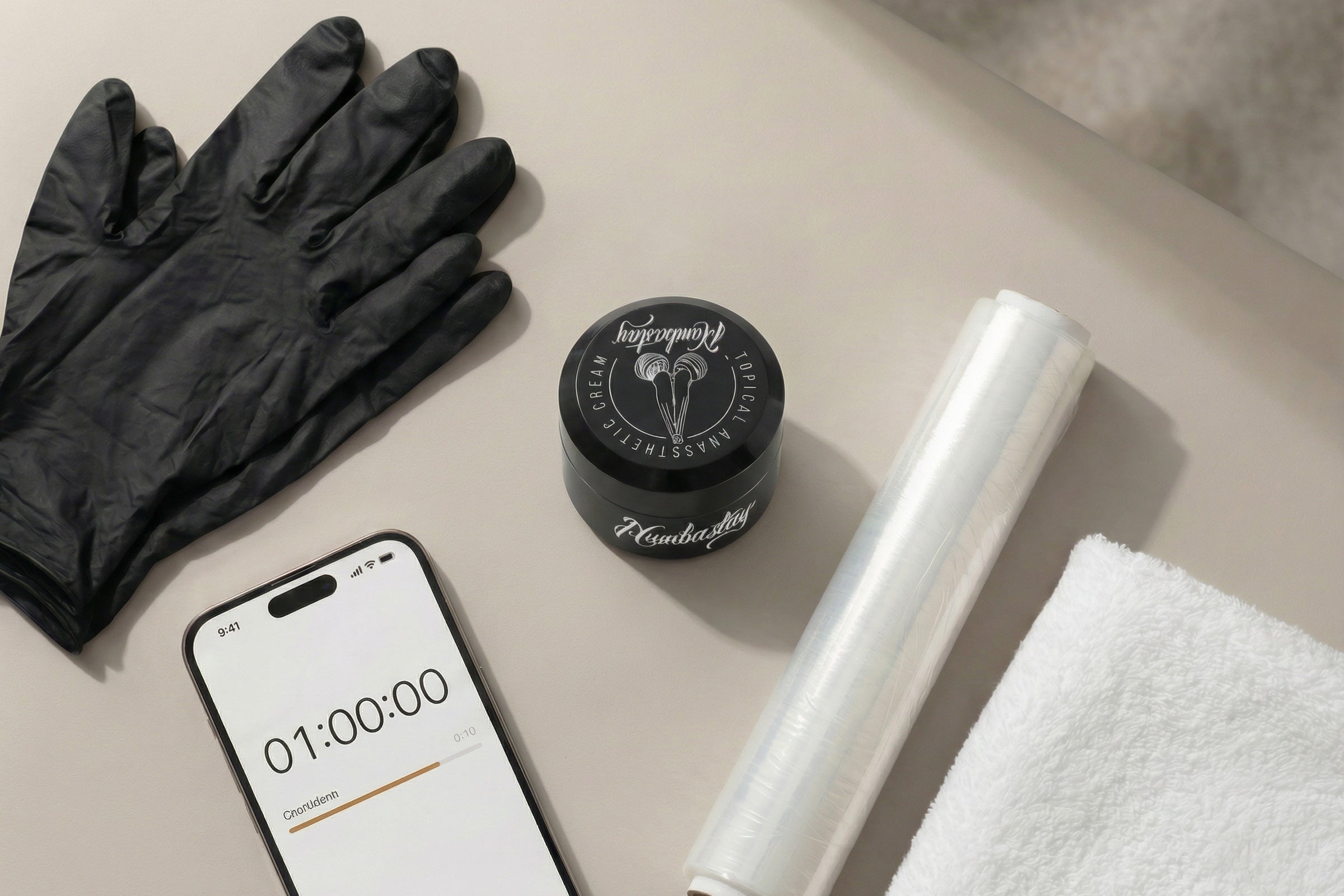
Apply tattoo numbing cream 60–90 minutes before your appointment to clean, unbroken skin. Cover with occlusive wrap immediately, allow full absorption, then remove completely before stencil placement. Always inform your tattoo artist before use.
Why Timing Is Critical
Topical numbing cream works by temporarily reducing nerve signal transmission in the skin.
For this to happen effectively:
- The cream must absorb fully
- The area must be wrapped (occluded)
- The timing must align with your tattoo start time
Incorrect timing is the number one reason people say, “It didn’t work.”
Morning Tattoo Appointments: Exact Timeline
Morning sessions can be slightly more difficult because:
- Body temperature is lower
- Circulation may be slower
- You may feel rushed preparing
Example: 10:00am Appointment
8:30am–8:45am
- Clean the area thoroughly
- Apply a thick, even layer (do not rub in)
- Wrap immediately with cling film
9:45am–9:55am
- Remove wrap
- Wipe away all residue
- Allow skin to normalise before stencil
Arrive prepared—not still wrapped—unless your artist specifically instructs it.
Morning Timing Tips
- Don’t apply at 7:00am “just in case”
- Eat beforehand to stabilise circulation
- Stay hydrated
- Keep stress low
The goal is alignment—not over-preparation.
Afternoon Tattoo Appointments: Exact Timeline
Afternoon sessions are generally easier to time because:
- Body temperature is stable
- Circulation is more active
- You’re less rushed
Example: 1:00pm Appointment
11:15am–11:30am
- Clean the area
- Apply a thick, visible layer
- Wrap immediately
12:45pm–12:55pm
- Remove completely
- Wipe clean
- Prepare for stencil
This 60–90 minute window is the most reliable range.
Evening Appointments (Bonus Timing)
For 5:00pm–6:00pm bookings:
- Apply between 3:30pm–4:00pm
- Remove just before session begins
Avoid applying after intense physical activity or when you’re overheating.
What Happens If You Apply Too Early?
If you apply numbing cream 2–3 hours before your appointment and leave it sitting too long, you may experience:
- Reduced effectiveness
- Skin surface softening
- Shorter duration during the session
More time does not equal stronger results.
What Happens If You Apply Too Late?
If applied for only 30–45 minutes, you may get:
- Incomplete activation
- Reduced depth effect
- Shorter duration
This is one of the most common timing mistakes.
Should You Remove It at Home or in Studio?
Best practice is simple: remove fully before tattooing begins and ensure the skin is clean and dry.
Some artists prefer removal in studio. Always clarify with your artist beforehand—communication prevents complications.
How Long Does It Last After Application?
Duration depends on:
- Placement (ribs vs thigh)
- Skin thickness
- Circulation
- Session intensity
- Correct preparation
When applied properly within the 60–90 minute window, many clients experience reduced discomfort for a substantial portion of their session. Incorrect timing dramatically reduces duration.
Areas That Benefit Most From Precise Timing
Precise timing matters most for:
- Rib tattoos
- Sternum tattoos
- Spine placements
- Large colour pieces
- Long multi-hour sessions
Common Timing Mistakes to Avoid
- Applying hours too early
- Rushing under 60 minutes
- Not using occlusion
- Leaving residue on skin
- Not informing your artist
Timing + communication = predictable results.
Does Timing Affect Ink Quality?
When applied correctly and removed fully before stencil placement: No.
Problems usually come from residue, over-saturation, or improper surface prep. Correct timing protects skin stability.
Final Thoughts
Tattoo numbing cream is not about avoiding discomfort. It’s about preparation.
When you align the 60–90 minute window with your appointment time, you support:
- Stability
- Focus
- Reduced movement
- Cleaner execution
If you choose to use numbing cream, use it with precision.
Australian made. Professionally formulated. Designed for ink.
Frequently Asked Questions
How long before a tattoo should I apply numbing cream?
Apply numbing cream 60–90 minutes before your appointment to clean, unbroken skin, wrap it under occlusion, then remove completely before stencil placement.
Can I apply numbing cream the night before my tattoo?
No. Applying hours too early can reduce effectiveness and may wear off before your session starts. Stick to the 60–90 minute window unless your artist instructs otherwise.
Should I remove numbing cream before I arrive at the studio?
Usually, yes—your skin should be clean and dry before tattooing begins. Some artists prefer removal in studio, so confirm with your artist ahead of time.
What if I only leave numbing cream on for 30 minutes?
Short application times often cause incomplete activation and a shorter duration of reduced sensation. For consistent results, allow 60–90 minutes under occlusion.
What if I leave numbing cream on for 2–3 hours?
Leaving it on too long doesn’t usually improve results and may soften the surface skin, reducing control and duration. Timing precision matters more than extra time.
Does timing change depending on the tattoo area?
Yes. High-sensitivity areas like ribs, sternum, and spine benefit most from precise timing and proper occlusion because discomfort is higher and movement matters more.
Can I reapply numbing cream during a session?
Only under professional guidance. Reapplication is different from pre-session prep and should be managed by your tattoo artist.
Does using numbing cream affect ink?
When applied correctly and removed completely before stencil placement, numbing cream should not negatively affect tattoo quality. Issues are usually caused by residue or poor prep.
Read our Guide Tattoo Numbing Cream Australia: The Complete Professional Guide